Views: 0 Author: Site Editor Publish Time: 2025-12-10 Origin: Site


In today's tech-driven world, ensuring battery performance is more important than ever. From smartphones to electric vehicles (EVs), reliable batteries are essential.Battery testing equipment ensures that these batteries meet safety and performance standards. In this article, you will learn about the different types of testing equipment, how they work, and their crucial role in various industries.
Battery testing equipment refers to the instruments used to measure various parameters of a battery’s performance, including capacity, voltage, and internal resistance. These tests help determine the battery’s health and efficiency, ensuring it can perform as expected in its respective device or system. Typically, this equipment is used for evaluating the charging and discharging behavior, identifying degradation, and predicting battery lifespan.
There are several types of battery testing equipment, each designed for different testing needs. The most common types include:
● Battery Analyzers: Used to test a battery’s overall health by measuring its charge/discharge cycles.
● Charge/Discharge Testers: Measure the battery’s charging rate, capacity, and discharging efficiency.
● Impedance Testers: Measure the internal resistance of the battery, which is crucial for identifying degradation.
● Load Testers: Apply a known load to the battery and monitor its response to evaluate performance under stress.
TERTRON offers a range of specialized products for battery testing:
● Battery Aging Machine: Used to simulate the aging process of batteries, helping to predict their lifespan and performance.
● Battery Formation Machine: Essential for forming and conditioning battery cells during the initial stages of production.
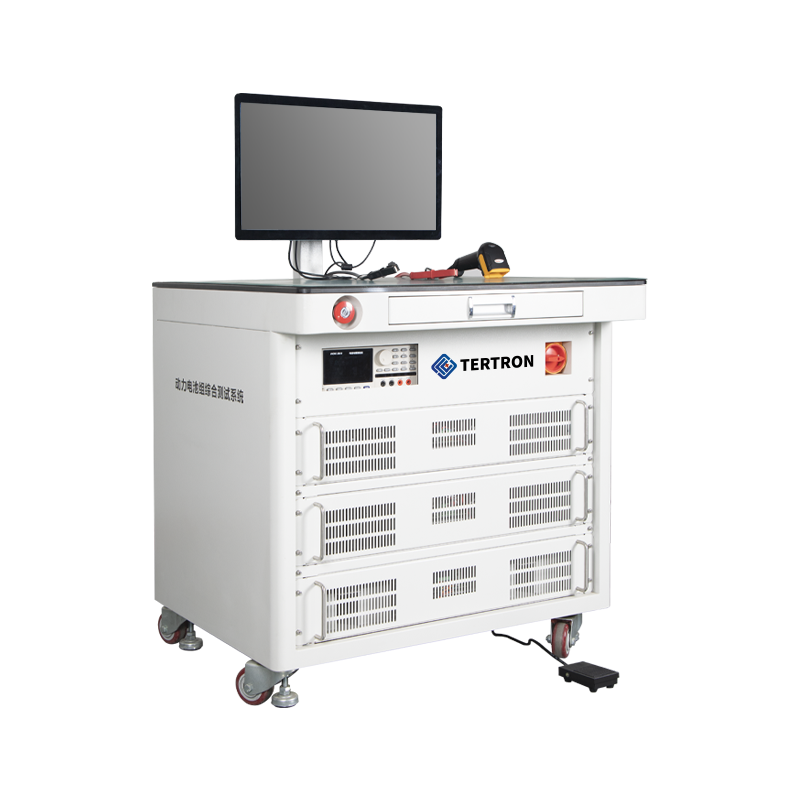
● Battery Test System: Provides a comprehensive testing solution for evaluating various battery parameters, ensuring optimal performance.
● Battery EOL Tester: Used to assess the end-of-life (EOL) condition of batteries, helping to determine when a battery has reached its maximum wear and tear.
Type of Battery Tester | Purpose | Typical Uses |
Battery Analyzers | Test overall battery health | Evaluating battery life cycles, capacity |
Charge/Discharge Testers | Measure charging and discharging efficiency | Smartphones, laptops, EV batteries |
Impedance Testers | Measure internal resistance | Identify battery degradation |
Load Testers | Apply load to measure performance | Industrial applications, backup power systems |
Simulate battery aging | Predict lifespan, performance testing | |
Initial conditioning of battery cells | Battery production lines, testing readiness | |
Battery Test System | Comprehensive testing system | Full battery testing solutions |
Battery EOL Tester | Assess battery end-of-life | Determining when to replace batteries in systems |
Regular battery testing is essential for maintaining battery health. By conducting tests, users can:
● Prevent Failures: Early detection of issues like poor charging efficiency or excessive heat buildup can prevent sudden failures.
● Improve Lifespan: Proper testing helps identify degradation and provides insights on how to prolong battery life.
● Maintain Device Efficiency: Ensures that devices powered by batteries perform at their best, avoiding performance drop-offs due to battery issues.
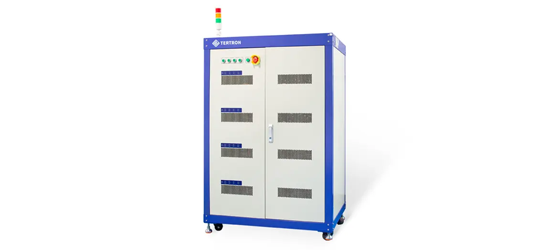
Battery testers work by applying specific conditions to the battery (like charging or discharging) and measuring the performance based on predefined parameters. The tester measures:
● Voltage: The electrical potential difference between two battery terminals.
● Capacity: The amount of charge a battery can store.
● Internal Resistance: The battery’s resistance to current flow, which affects its efficiency.
● Charging/Discharging Cycles: The time it takes to charge and discharge the battery under normal conditions.
These tests give valuable insights into how well a battery performs and how much energy it can deliver.
Battery testers come with several essential features:
● Load Simulation: Some testers simulate the battery’s load conditions to see how it performs under stress.
● Temperature Monitoring: Many testers monitor temperature fluctuations, as excessive heat can indicate problems with the battery.
● Battery Capacity Assessment: These testers measure how much energy the battery can store and release, providing a direct indicator of its health.
These features ensure that testing is thorough, allowing users to make informed decisions about battery replacement or maintenance.
There are two primary types of battery testers:
● Digital Battery Testers: Provide precise readings and often include additional features such as data logging and detailed reports. They are typically more accurate and easy to read.
● Analog Battery Testers: Use a dial or needle to show the results. While they are generally less expensive, they lack the precision and features of digital testers.
Digital testers are better for detailed analysis and accuracy, while analog testers can still be used for quick, general testing.
In consumer electronics like smartphones, laptops, and tablets, battery testing equipment ensures that batteries perform efficiently and safely. Battery testers check parameters like voltage, charge cycles, and capacity, ensuring devices last longer between charges and reducing the risk of battery-related issues.
For electric vehicles (EVs), battery testing is critical to ensuring safe and optimal performance. EV batteries are large and expensive, and testing helps monitor their health over time. Testing equipment for EVs checks charging rates, energy efficiency, and lifespan, contributing to vehicle safety and reliability.
In industrial settings, battery testing is used to monitor backup power systems, UPS (uninterruptible power supplies), and large-scale energy storage systems. Industrial batteries are crucial for operations that rely on constant power, so testing ensures they are always ready when needed. Testing helps identify performance degradation before failures occur, ensuring reliability and safety in critical operations.
Regular battery testing identifies signs of degradation early on, such as reduced capacity or internal resistance, allowing users to address issues before they become major problems. By catching problems early, users can extend the lifespan of their batteries and delay the need for replacements.
Proper testing ensures batteries perform at their optimal level, avoiding malfunctions like overheating or power loss. This is especially important in high-stakes environments like EVs and industrial applications, where battery failures can lead to safety hazards.
By using battery testing equipment, users can avoid unnecessary replacements and costly repairs. Accurate testing helps identify which batteries need replacement, reducing waste and ensuring that only failing batteries are swapped out, saving on operational costs.
Battery testers must be compatible with various battery types (e.g., Li-ion, NiMH, lead-acid). It's important to choose equipment that supports the specific type of battery being tested to ensure accurate results.
High-accuracy testers provide reliable results, helping users make informed decisions about battery health. Precision is especially important in high-performance applications like EVs or critical backup systems.
For field testing, battery testers should be easy to use and portable. User-friendly interfaces and compact designs make it easier for technicians to perform tests anywhere, ensuring that battery health can be monitored in real-time.
Inaccurate results can occur due to faulty connections, improperly calibrated equipment, or battery defects. Ensuring proper setup and calibration is crucial for reliable data.
Regular calibration and maintenance of battery testing equipment are necessary to ensure it continues to provide accurate results. Failure to maintain equipment may lead to unreliable measurements.
Safety is crucial when testing batteries, especially in large industrial applications or EVs. Always follow proper handling protocols to avoid risks like short circuits, overheating, or fire.
The future of battery testing equipment lies in innovations like artificial intelligence (AI) and the Internet of Things (IoT). These technologies are improving accuracy, automating testing processes, and providing more detailed insights into battery health.
As new battery technologies, such as solid-state batteries and other advanced chemistries, emerge, testing equipment will evolve to meet the demands of these innovations, providing more detailed chemical and performance analysis.
Battery testing equipment is essential for ensuring the performance, safety, and longevity of batteries across multiple industries. From consumer electronics to EVs and industrial applications, testing plays a vital role in maintaining battery health and preventing failures.As batteries become an increasingly important part of modern technology, investing in high-quality testing equipment is crucial. Regular testing will not only enhance battery performance but also save costs and improve the safety of devices and systems that depend on battery power.
TERTRON specializes in designing and manufacturing high-quality battery testing systems. Our products include laboratory-scale manufacturing equipment for battery raw materials such as prismatic cells, cylindrical cells, and pouch cells, as well as battery pack assembly lines and battery test equipment. We ensure top-quality equipment and reliable results for a wide range of applications.
A: Battery testing equipment is used to evaluate a battery's performance, including parameters like capacity, voltage, and internal resistance. It helps ensure the battery is functioning efficiently and safely.
A: Battery testing equipment is essential for ensuring battery reliability, preventing failure, and extending battery lifespan by identifying issues early, such as degradation or inefficiency.
A: Battery testing equipment works by measuring key parameters such as voltage, capacity, and internal resistance. It applies different conditions to the battery, simulating real-life usage to assess its performance.
A: Battery testing equipment can be used for various types of batteries, including lithium-ion, nickel-metal hydride (NiMH), and lead-acid, depending on the tester's features and capabilities.