Views: 0 Author: Site Editor Publish Time: 2025-10-30 Origin: Site


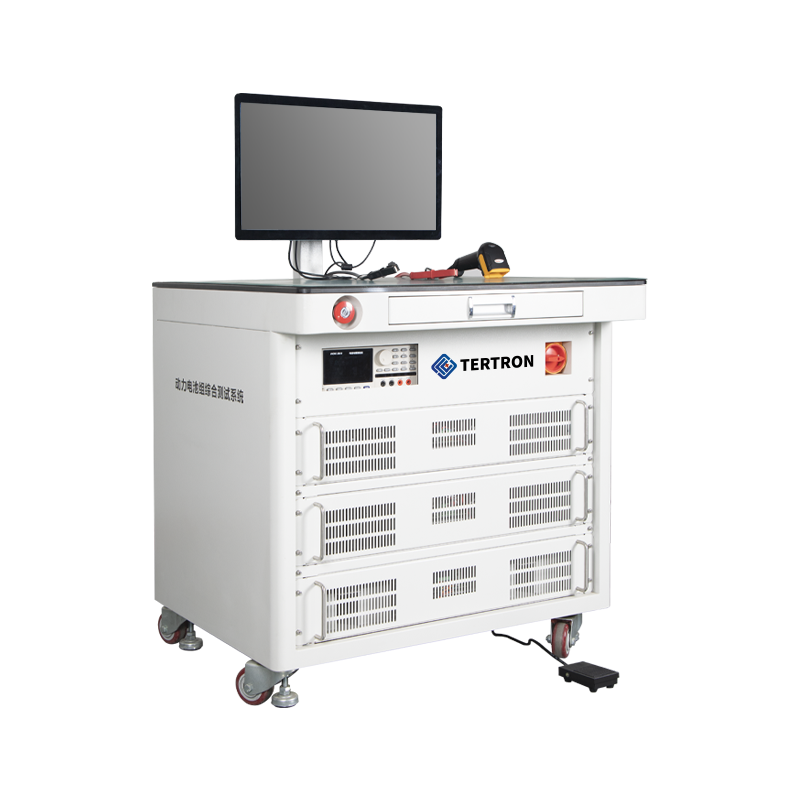
Battery aging machines play a critical role in the modern battery manufacturing process. These specialized devices simulate real-world usage by subjecting batteries to repetitive charge and discharge cycles under controlled conditions. By doing so, manufacturers and researchers can accurately evaluate battery performance, lifespan, and overall reliability before products reach the market.
With the growing demand for high-performance batteries in electric vehicles, consumer electronics, renewable energy storage, and industrial applications, the accuracy of these tests has become more important than ever. Inaccurate testing can lead to premature battery failures, safety risks, and reduced consumer trust.
In recent years, Artificial Intelligence (AI) and Big Data analytics have started transforming battery testing processes. By analyzing massive datasets and predicting performance trends, these technologies enhance the precision, efficiency, and predictive capabilities of battery aging machines. Integrating AI and Big Data allows manufacturers to detect subtle degradation patterns, optimize testing cycles, and make data-driven decisions that improve battery quality and longevity.
While battery aging machines are essential for assessing battery performance, conventional testing methods face several limitations that can affect accuracy and efficiency. Understanding these challenges helps explain why AI and Big Data are becoming integral to modern battery testing.
Traditional battery aging tests often involve prolonged charge and discharge cycles to simulate long-term usage. These tests can take weeks or even months to produce meaningful results. The repetitive nature of these procedures not only slows down product development but also increases the risk of human error during monitoring and data recording.
Batteries degrade in complex ways, influenced by factors such as temperature fluctuations, varying load demands, and environmental conditions. Conventional testing struggles to accurately predict how batteries will perform under diverse real-world scenarios. As a result, manufacturers may face unexpected performance issues or safety concerns after the batteries are deployed.
Modern battery testing generates vast amounts of data, including voltage profiles, internal resistance measurements, capacity retention, and thermal behavior. Traditional aging machines and manual analysis methods are often insufficient to handle this large-scale data efficiently. This limitation makes it difficult to identify subtle degradation trends or optimize battery designs based on comprehensive insights.
By recognizing these challenges, the battery industry has increasingly turned to AI and Big Data solutions to enhance testing accuracy, reduce testing time, and provide actionable insights for better battery development.
Artificial Intelligence (AI) is transforming battery aging testing by enabling more precise, faster, and insightful evaluations. By integrating AI into battery aging machines, manufacturers can achieve higher accuracy, reduce testing time, and better predict battery performance under various conditions.
AI algorithms can analyze historical battery data to predict degradation trends over time. By using predictive models, manufacturers can estimate the lifespan and capacity loss of batteries more accurately, reducing the need for excessively long testing periods. This predictive insight helps in designing batteries with improved durability and reliability.
During repetitive charge and discharge cycles, AI can continuously monitor battery behavior and detect anomalies in real time. Irregular voltage fluctuations, temperature spikes, or unexpected capacity drops are identified immediately, allowing corrective measures to prevent faulty batteries from progressing through the production line.
AI-driven control systems can dynamically adjust charge and discharge parameters based on real-time data. This optimization accelerates testing while maintaining high precision, ensuring that batteries are evaluated efficiently without compromising accuracy.
Machine learning models can be trained using diverse datasets from different battery types, including Li-ion, LiFePO4, and NiMH cells. This adaptability enables battery aging machines to provide reliable results across multiple chemistries, supporting both research and large-scale manufacturing.
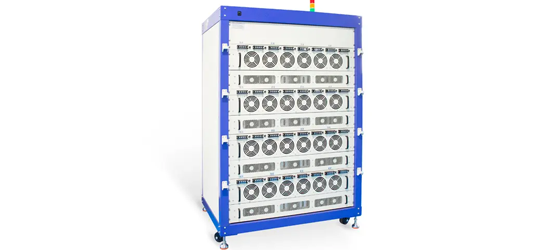
Big Data is revolutionizing battery aging testing by providing the ability to collect, store, and analyze vast amounts of performance data across multiple battery types, aging cycles, and testing environments. Leveraging Big Data analytics allows manufacturers and researchers to gain deeper insights, improve battery quality, and accelerate innovation.
Modern battery aging machines can generate large volumes of data, including charge/discharge cycles, voltage profiles, temperature variations, and internal resistance changes. Big Data platforms enable the systematic aggregation of this information from multiple tests, ensuring no critical performance metric is overlooked.
Advanced analytics can detect nuanced trends in battery degradation that may not be visible through traditional testing. For instance, small deviations in capacity retention or slight increases in internal resistance can indicate early signs of aging, allowing engineers to make proactive adjustments in battery design or production processes.
By analyzing historical and real-time data, manufacturers can predict battery lifespan and maintenance requirements with higher accuracy. Big Data insights guide improvements in materials, electrode formulations, and cell architecture, ultimately leading to longer-lasting and safer batteries.
Combining datasets from multiple battery aging machines provides a comprehensive view of performance across different models, chemistries, and operational conditions. This integrated approach allows manufacturers to standardize testing, identify systemic issues, and optimize production quality control.
By incorporating Big Data analytics into battery aging testing, companies can achieve more precise performance evaluation, accelerate R&D efforts, and produce batteries that meet stringent reliability and safety standards.
The integration of Artificial Intelligence (AI) with Big Data analytics is transforming the way battery aging machines evaluate performance, reliability, and longevity. By leveraging these technologies together, manufacturers can gain deeper insights, enhance testing accuracy, and optimize battery development processes.
AI algorithms can efficiently process massive datasets generated from multiple aging cycles, battery chemistries, and operational conditions. Machine learning models identify complex patterns in voltage fluctuations, capacity retention, and internal resistance, providing actionable insights that guide improvements in battery design and production.
Combining AI with Big Data improves the precision of aging tests by reducing manual errors and minimizing the impact of environmental variability. Test cycles can be optimized for faster evaluation without compromising accuracy, resulting in lower operational costs and higher throughput in quality assurance processes.
Electric Vehicle Batteries: AI-driven analysis predicts degradation trends, helping manufacturers extend battery lifespan and optimize charging strategies.
Renewable Energy Storage: Integration ensures batteries used in solar or wind systems maintain consistent performance under varying loads and environmental conditions.
Consumer Electronics: Accurate testing safeguards sensitive devices like smartphones, laptops, and portable electronics from premature battery failures, ensuring safety and reliability.
By uniting AI with Big Data, modern battery aging machines provide faster, more accurate, and predictive testing results. Manufacturers can make data-driven decisions, enhance battery performance, improve safety, and accelerate the development of next-generation energy storage solutions.
AI and Big Data are transforming battery aging machine testing, delivering unprecedented accuracy, efficiency, and actionable insights. By leveraging predictive analytics and large-scale data processing, modern testing systems can detect subtle performance trends, optimize test cycles, and ensure reliable evaluation across diverse battery chemistries. This technological advancement enhances battery safety, extends lifespan, and accelerates innovation in electric vehicles, consumer electronics, and renewable energy storage. For manufacturers and researchers seeking advanced, AI-enabled battery aging solutions, consulting industry-leading providers like Guangzhou TERTRON New Energy Technology Co., Ltd. can help select high-quality machines tailored to specific testing needs and ensure optimal performance for long-term battery development.